
Teen Patti hand rankings and the odds behind each hand
The six hand categories from trail to high card, how many of the 22,100 possible three-card hands fall into each, and what that means for side bets.
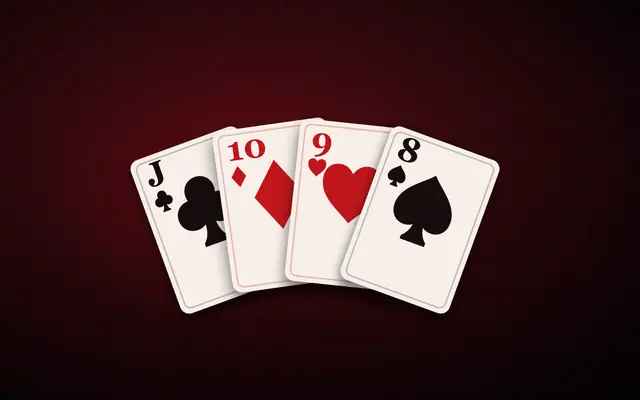
Teen Patti means "three cards". In the live 20-20 casino format, two three-card hands, Player A and Player B, are dealt from one 52-card deck, and bettors choose which will rank higher. Nobody plays a hand, so the result is down to chance.
Hand rankings, high to low
- Trail: three of a kind.
- Pure sequence: three consecutive cards of the same suit.
- Sequence: three consecutive cards of mixed suits.
- Colour: three cards of the same suit.
- Pair: two cards of the same rank.
- High card: none of the above.
A higher category always beats a lower one. Within a category, higher card ranks win. Aces rank high, but how a particular live game treats an ace-two-three run is set by the provider.
How common each hand is
There are 22,100 different three-card hands in a 52-card deck:
- Trail: 52 hands (0.24%)
- Pure sequence: 48 hands (0.22%)
- Sequence: 720 hands (3.26%)
- Colour: 1,096 hands (4.96%)
- Pair: 3,744 hands (16.94%)
- High card: 16,440 hands (74.39%)
Nearly three hands in four are just a high card, and a pair or better appears in 5,660 of the 22,100 hands, or 25.61%. One quirk: a trail outranks a pure sequence even though a pure sequence is slightly rarer (48 hands against 52). That is simply how the traditional order works.
What the odds mean for the bets
The figures below use the published 20-20 paytable reported by one independent analysis site. Providers can use different payouts and limits, so check the table in front of you.
- Player A or Player B: pays 0.95 to 1, with ties returned. House edge 2.50% per resolved bet.
- Tie: pays 800 to 1, but both hands tie in only 0.1106% of rounds, about 1 in 904. House edge 11.37%.
- Pair Plus: a side bet on the strength of one hand, paying 50 to 1 for three aces, 40 to 1 for other trails, 30 to 1 for a pure sequence, 6 to 1 for a sequence, 3 to 1 for a colour and 1 to 1 for a pair. Three aces are just 4 of the 22,100 hands. House edge 6.91%.
Pair Plus shows how the maths works. The top prizes look large next to the stake but come around very rarely, and the most common winning hand, the pair, pays only 1 to 1. Weighted by how often each hand occurs, the whole bet returns less than was staked.
Joker versions add wild cards, which make strong hands more common and change the odds. Their paytables depend on the provider, so these figures should not be applied to them.
This guide is for information only and is for adults aged 18 or over, or the legal age where you live. Every bet has a house edge, so players lose on average. Set limits in advance and take a break if it stops being fun.
Full Teen Patti 20-20 rules & odds
18+ only. This article is for information, not advice to gamble. Responsible gambling.